
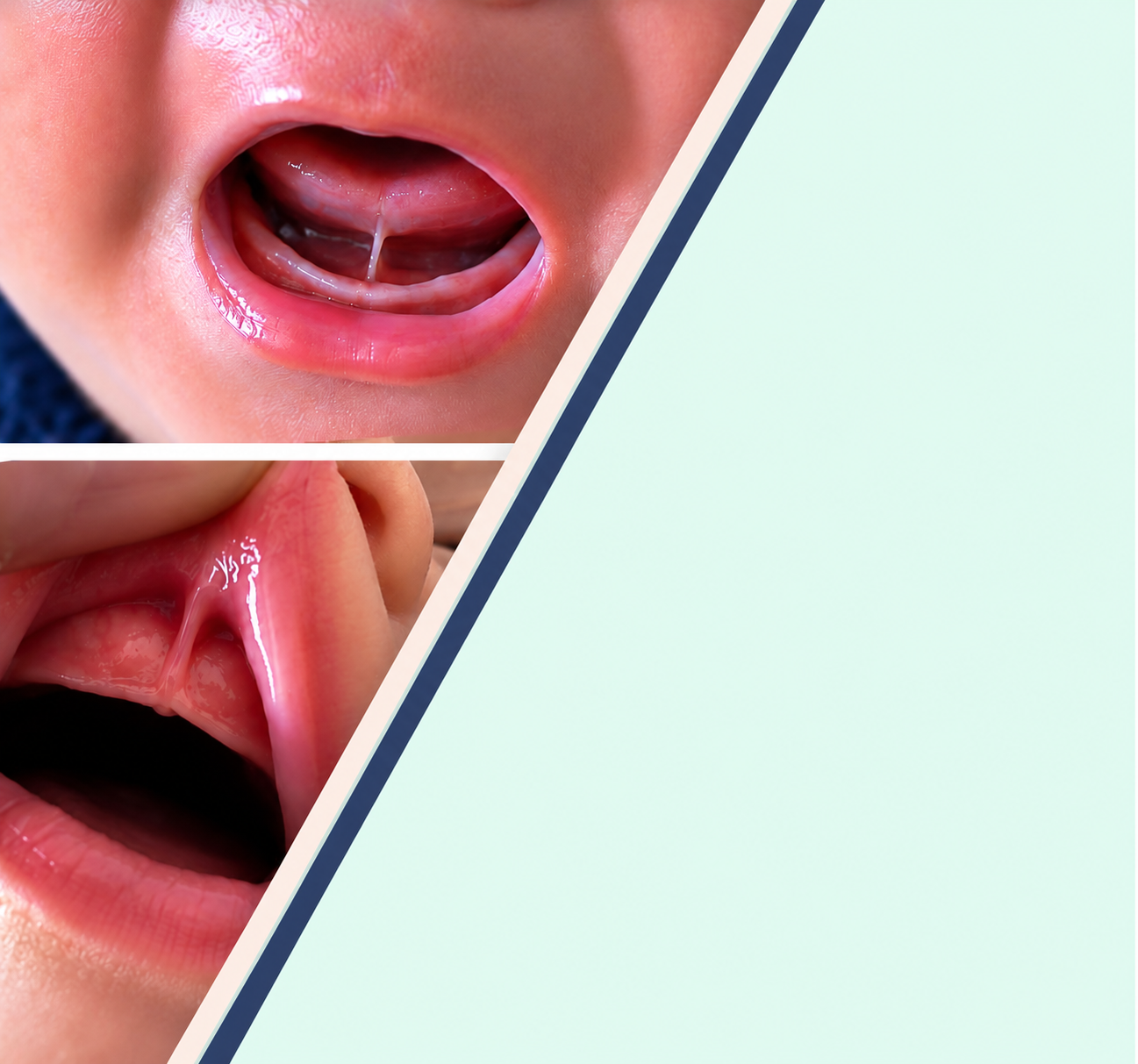
Lip Tie vs Tongue Tie: Main Differences Parents Should Know
A baby who clicks, slips off the nipple, leaks milk, or takes a long time to feed may leave parents wondering about lip tie vs tongue tie. A lip tie limits upper-lip movement, while a tongue tie limits how freely the tongue lifts or reaches forward.
Because the signs overlap, one symptom cannot identify the cause. What matters is whether movement supports comfortable feeding, growth, and later oral care.
Lip Tie Vs Tongue Tie: Quick Difference
The common tongue tie vs lip tie baby question becomes easier when you compare movement instead of appearance.
Upper Lip Tie: What It Means
A small band normally joins the upper lip to the gum. It becomes a concern when it limits movement and causes a real problem.
Parents searching for an upper lip tie baby often notice that the top lip stays curled inward around the breast or bottle. Still, a prominent attachment may cause no trouble. Lip movement, suction, comfort, feeding time, and growth should be considered together.
Tongue Tie: What It Means
A tongue tie involves a tight band beneath the tongue. A baby may struggle to lift the tongue, move it side to side, or extend it over the lower gum.
The tongue helps maintain suction and move milk. A notched or heart-shaped tip can be a clue, but appearance alone is not enough.
Lip Tie Signs: What Parents Notice
Searches for lip tie symptoms baby often begin after repeated feeding frustration.
Lip Movement Clues
The upper lip may stay tucked inward, feel difficult to lift, or lose its seal. Milk may leak from the mouth as the baby tires.
Feeding Clues
Common lip tie breastfeeding signs include clicking, a shallow latch, long feeds, frequent slipping, and nipple discomfort. Bottle-fed babies may leak milk, swallow extra air, or pause often.
These signs are not proof. Fast milk flow, bottle nipple flow, feeding position, or congestion can look similar.
Tongue Tie Signs: What Parents Notice
The baby may struggle to lift the tongue, extend it past the lower gum, or move it evenly from side to side.
Parents may notice clicking, weak suction, short sucking bursts, low milk intake, or hunger soon after feeding. The feeding parent may have ongoing pain despite position changes.
Lip restriction mainly affects the seal. Tongue restriction can affect both suction and milk movement.
Lip And Tongue Tie: Can Both Happen?
Yes. One tie may limit the upper lip while the other limits tongue movement.
Because both can cause leaking, clicking, long feeds, or poor suction, parents usually cannot identify the cause from symptoms alone. A complete check should consider the lip, tongue, feeding pattern, comfort, and weight progress.
Toddler Lip Tie: What Changes?
A lip tie in a toddler may become noticeable during brushing or eating. The lip may be difficult to lift, food may collect above the front teeth, or the child may dislike having that area brushed.
Some toddlers also have a gap between the upper front teeth. A gap alone does not mean treatment is needed because spacing may change as the mouth grows. Regular preventive dentistry visits can monitor cleaning, gum comfort, spacing, and daily function.
A visible lip tie should not automatically be blamed for every speech concern.
Lip And Tongue Tie Treatment: Is It Needed?
No. A visible tie does not automatically need treatment. The decision should be based on a clear problem, such as low milk intake, feeding pain, slow weight gain, repeated loss of suction, eating difficulty, or trouble cleaning the upper front teeth.
The American Academy of Pediatrics advises trying feeding support first and considering a tie-release procedure only when important movement problems continue.
Before a lip and tongue tie evaluation, parents can ask for help with latch, position, bottle nipple flow, and milk supply. Dr. Tiffany can compare movement with daily problems and explain whether monitoring or treatment makes sense.
Lip And Tongue Tie Evaluation: Who Can Help?
Support may involve the child’s doctor, a feeding specialist, a pediatric dentist, or a feeding therapist.
A useful evaluation may include watching a feed, checking movement, reviewing feeding time and comfort, and looking at weight progress. For a toddler, it may also include eating, speech, brushing, and gum comfort.
Dr. Tiffany helps parents connect what they notice at home with the child’s movement during an exam. Parents should leave knowing what is normal, what may need support, and what to watch.
Lip Tie Vs Tongue Tie: Next Steps
Lip tie affects upper-lip movement, while tongue tie affects tongue movement. Feeding signs overlap, so clicking, leaking, or a shallow latch should be treated as clues, not a final answer.
Track feeds, note pain or fatigue, and discuss weight progress with your child’s care team. Seek an evaluation when problems continue. The goal is to learn whether limited movement affects feeding, eating, speech, cleaning, or comfort.
Why Choose The Little Smile Loft Pediatric Dentistry?
At The Little Smile Loft Pediatric Dentistry, Dr. Tiffany carefully reviews your child’s lip and tongue movement, feeding concerns, oral habits, and comfort. She explains what she sees in clear language, discusses whether support or treatment may help, and guides parents toward a next step without using a one-size-fits-all approach.
Lip Tie Vs Tongue Tie FAQs
Is Lip Tie The Same As Tongue Tie?
No. A lip tie limits how freely the upper lip lifts or turns outward, while a tongue tie limits tongue movement. Both may affect feeding, but the location, movement problem, and most useful signs are different.
Which Tie Limits Tongue Movement Most?
A tongue tie is more likely to limit lifting, extending, or side-to-side tongue movement. A lip tie mainly affects the upper lip’s ability to lift and form a comfortable seal during breast or bottle-feeding.
Can A Baby With Lip Tie Bottle-Feed Normally?
Yes. Many babies with a visible lip tie bottle-feed without difficulty. Seek help when milk repeatedly leaks, feeding takes too long, clicking continues, or your baby tires before finishing the bottle.
Does Clicking Always Mean A Tie?
No. Clicking may happen with a shallow latch, fast milk flow, bottle nipple flow, feeding position, or trouble keeping suction. Look at the full pattern, including comfort, milk transfer, and weight gain.
Can A Picture Confirm Lip Or Tongue Tie?
A photo may show where the tissue attaches, but it cannot show how well the lip or tongue moves during feeding. A useful evaluation checks movement, feeding comfort, suction, milk transfer, and growth together.

Nurtured Smiles
Lifelong Confidence
Your child deserves the very best. From their teeth to their confidence in every smile, we’re here to give your child a bright beginning to dental care. Get in touch with us today – we can’t wait to show you how fun and easy dentistry can be!